Birds: Different Types, Definition, Photos, and More


Birds: Different Types, Definition, Photos, and More

Updated: April 17, 2022
© Drakuliren/Shutterstock.com
Share on:   

Advertisement

A-Z Animals was founded on three guiding principles: accurate content you can trust, spreading knowledge on the animal kingdom, and giving back. Today, more than 30,000 species are threatened with extinction, and thousands would already be lost without tireless conservation efforts. Knowing that the first step toward conservation is spreading knowledge of the incredible animals species across our planet, A-Z Animals was founded in 2008 to offer an online encyclopedic resource across animals of all kinds.
0 seconds of 1 minute, 10 secondsVolume 0%
 

Birds, members of the class Aves, include more than 10,400 living bird species – more than half being passerine, or “perching” birds. Their feathers distinguish them from all other classes of animal; no other animals on earth have them.

Beautiful to behold and charming to watch, there are many different types of birds that are often kept as pets by humans, and are the subject of many a story or photograph. Birdwatchers number in the millions while bird feeding is a multi-million dollar industry made possible by human beings’ love of our feathered friends.

If you see an animal with feathers, it’s undoubtedly a bird. Like mammals, birds are warm-blooded vertebrates with four-chambered hearts. However, birds are more closely related to reptiles and are believed to have evolved from dinosaurs. Their closest living relatives are the crocodilians.

Their forelimbs have been modified into wings over many millions of years of evolution, they lay hard-shelled eggs and they have exceptional vision – the most acute of their senses. Most types of bird species are diurnal, meaning they sleep at night.

Different types of birds may display different behaviors, though in general, birds are social creatures, communicating with songs, calls, chirps and movements. Some birds participate in cooperative hunting and travel in flocks. Many birds are monogamous – mostly for a breeding season but sometimes for life.

Most birds can fly, but flightless bird species exist.

Five Top Bird Characteristics

Certain identifying characteristics distinguish different types of birds from other classes of animals. Five especially important distinguishing characteristics of birds include:

Feathers

All birds species have feathers, which are actually highly evolved scales. In fact, birds have scales on their feet – the clearest reminder of their close relation to reptiles. As noted above, feathers are not found on any other class of animal. Like nails and hair on humans, feathers are made out of keratin. They serve a number of purposes, from providing warmth to assisting in the ability to fly. Most species of birds shed, or molt, their feathers one or two times per year. Contour feathers help birds to fly effectively and create a streamlined body shape. Soft, fluffy feathers provide warmth. Flight feathers, found on the wings and tail, provide loft. Male birds also often use their feathers to attract mates.

Wings

Wings are a primary characteristic of birds, but they are found on other types of animals too. For example, bats are flying mammals with wings, and many types of insects have wings. Strong muscles in the chest help to propel wings, allowing for flight. Bird bodies are curved specifically to give lift to the wings. Different wing shapes provide different advantages, depending on species. For example, wings that have sharp, narrow tips allow for greater speed. Wings that are longer than they are wide make it easier for birds to soar for extended periods of time. Elliptical, evenly shaped wings, which are most notably found on songbirds, allow for small, quick movement. Different types of birds are capable of swimming, like penguins and puffins, having wings that are shaped like flippers.

Beaks

All bird species have beaks, or bills – bony concentrations that are surrounded by layers of keratin. The shape of a bird’s beak provides strong clues about its dietary habits. Although some species of birds have tumia, sharp ridges along the edges of their beaks, none possess true teeth. Therefore, the beak plays a crucial role in feeding. Birds that primarily subsist off of seeds, for example, tend to have strong, cone-shaped beaks. Ducks, geese and other types of waterfowl have broad, flat beaks that are designed to help them strain food from water. Meat-eating birds like owls and hawks have sharp, hooked beaks that they use to grind, tear and rip their prey to shreds.

Eggs

Egg laying is another characteristic that is common to all birds, or members of the Aves class. However, it is not unique to this class of animals, as reptilesfishamphibians and insects also all lay eggs. Birds’ eggs have hard shells that are mostly made out of calcium; a layer of hardened mucus helps to keep them intact. Within an egg, the embryo gets its nutrition from the yolk and the egg white, which is known as albumin. The vast majority of bird species build nests for their eggs and proceed to care for the hatchlings until they are capable of fending for themselves. In most species, both males and females play important roles in caring for the young.

Nearly all species of birds incubate their eggs. Exceptions include megapodes, or mound builders, which rely on external heat sources like decaying vegetation, and brood parasites. The latter, including cuckoos and cowbirds, prefer to lay their eggs in other birds’ nests. Some birds, like murres and certain penguin species, don’t use nests at all, choosing instead to rest eggs on the tops of their feet during incubation. Incubation periods range from 11 to 80 days depending on species.

A set of eggs that is laid at one time is called a clutch. Anywhere from one to 20 eggs or so may be found in a single clutch. Some birds engage in determinate laying, meaning that they lay the same number of eggs per clutch every time. Most birds engage in indeterminate laying, meaning that the number per clutch varies.

Skeleton

Flightless species of birds have heavy bones that are filled with marrow. Birds that are capable of flight – in other words, most birds – have lightweight skeletons made up of hollow bones. Their skeletons have many fused bones, including collarbones, which help them to brace their wings effectively during flight. Birds have large breastbones, or sternums, that provide sturdy points of attachment for muscles of the wings.

Notable Types of Birds

Today, there are more than 10,400 extant different types of bird species in the world. Across North America and South America, there are more than 4,400 species of the Aves class. Approximately 2,700 different species are found in Asia, and another 2,300 or so are found in Africa. More than 500 species are found in Europe west of the Ural Mountains, and more than 700 species are found in Russia. Costa Rica has one of the highest concentrations of bird species – roughly 800.

Some of the most notable types of birds include:

  • Birds of Prey – This group is made up of more than 300 species of birds, including eagles, hawks, ospreys, falcons and vultures.
  • Cranes – This group, which includes coots and rails, boasts more than 200 species.
  • Game Birds – Perhaps the best-known type of bird, game birds include chickens, turkeysquails and megapodes. There are approximately 250 species of game birds in the world.
  • Herons and Storks – More than 100 species are found in this group, which includes egrets, spoonbills and ibises.
  • Hummingbirds and Swifts – The smallest category of birds, this group includes more than 400 different species.
  • Ostriches – The ostrich, the most famous flightless bird, is also the only species in its genus. It also holds the distinction of being among the largest birds.
  • Owls – Another important type of bird is the owl. There are more than 200 species of owls across the world.
  • Parrots and Cockatoos – This colorful group, which includes macaws, cockatiels and budgerigars, consists of more than 350 species. They are popularly kept as pets.
  • Penguins – There are roughly 20 species of this flightless bird in the world.
  • Perching Birds – Also known as passerines, this group includes more than 5,000 species, making it the largest and most diverse. Common types of perching birds include crows, swallows, jays, finches, sparrows, wrens, starlings and larks.
  • Pigeons and Doves – This group includes more than 300 bird species. Pigeons are famous for ferrying messages for humans, and have been used in such a way since Roman times. They were also used during World War I and II and the Korean War.
  • Shorebirds – More than 350 species are found in this group, including sandpipers, terns, oystercatchers and gulls.
  • Waterfowl – Ducks, geese, swans and many other birds belong to this group, which includes more than 150 species.
  • Woodpeckers and Toucans – Known for their distinctive beaks, this group is made up of more than 400 species.

Evolution of Different Types of Birds

The evolution of birds has been a topic of much debate for many centuries. Today, the most commonly accepted theory, the theropod ancestor hypothesis, posits that birds evolved from theropod dinosaurs during the Jurassic period, which happened between 165 million and 150 million years ago.


Birds: Different Types, Definition, Photos, and More

Updated: April 17, 2022
© Drakuliren/Shutterstock.com
Share on:   

Advertisement

A-Z Animals was founded on three guiding principles: accurate content you can trust, spreading knowledge on the animal kingdom, and giving back. Today, more than 30,000 species are threatened with extinction, and thousands would already be lost without tireless conservation efforts. Knowing that the first step toward conservation is spreading knowledge of the incredible animals species across our planet, A-Z Animals was founded in 2008 to offer an online encyclopedic resource across animals of all kinds.
0 seconds of 1 minute, 10 secondsVolume 0%
 

Birds, members of the class Aves, include more than 10,400 living bird species – more than half being passerine, or “perching” birds. Their feathers distinguish them from all other classes of animal; no other animals on earth have them.

Beautiful to behold and charming to watch, there are many different types of birds that are often kept as pets by humans, and are the subject of many a story or photograph. Birdwatchers number in the millions while bird feeding is a multi-million dollar industry made possible by human beings’ love of our feathered friends.

If you see an animal with feathers, it’s undoubtedly a bird. Like mammals, birds are warm-blooded vertebrates with four-chambered hearts. However, birds are more closely related to reptiles and are believed to have evolved from dinosaurs. Their closest living relatives are the crocodilians.

Their forelimbs have been modified into wings over many millions of years of evolution, they lay hard-shelled eggs and they have exceptional vision – the most acute of their senses. Most types of bird species are diurnal, meaning they sleep at night.

Different types of birds may display different behaviors, though in general, birds are social creatures, communicating with songs, calls, chirps and movements. Some birds participate in cooperative hunting and travel in flocks. Many birds are monogamous – mostly for a breeding season but sometimes for life.

Most birds can fly, but flightless bird species exist.

Five Top Bird Characteristics

Certain identifying characteristics distinguish different types of birds from other classes of animals. Five especially important distinguishing characteristics of birds include:

Feathers

All birds species have feathers, which are actually highly evolved scales. In fact, birds have scales on their feet – the clearest reminder of their close relation to reptiles. As noted above, feathers are not found on any other class of animal. Like nails and hair on humans, feathers are made out of keratin. They serve a number of purposes, from providing warmth to assisting in the ability to fly. Most species of birds shed, or molt, their feathers one or two times per year. Contour feathers help birds to fly effectively and create a streamlined body shape. Soft, fluffy feathers provide warmth. Flight feathers, found on the wings and tail, provide loft. Male birds also often use their feathers to attract mates.

Wings

Wings are a primary characteristic of birds, but they are found on other types of animals too. For example, bats are flying mammals with wings, and many types of insects have wings. Strong muscles in the chest help to propel wings, allowing for flight. Bird bodies are curved specifically to give lift to the wings. Different wing shapes provide different advantages, depending on species. For example, wings that have sharp, narrow tips allow for greater speed. Wings that are longer than they are wide make it easier for birds to soar for extended periods of time. Elliptical, evenly shaped wings, which are most notably found on songbirds, allow for small, quick movement. Different types of birds are capable of swimming, like penguins and puffins, having wings that are shaped like flippers.

Beaks

All bird species have beaks, or bills – bony concentrations that are surrounded by layers of keratin. The shape of a bird’s beak provides strong clues about its dietary habits. Although some species of birds have tumia, sharp ridges along the edges of their beaks, none possess true teeth. Therefore, the beak plays a crucial role in feeding. Birds that primarily subsist off of seeds, for example, tend to have strong, cone-shaped beaks. Ducks, geese and other types of waterfowl have broad, flat beaks that are designed to help them strain food from water. Meat-eating birds like owls and hawks have sharp, hooked beaks that they use to grind, tear and rip their prey to shreds.

Eggs

Egg laying is another characteristic that is common to all birds, or members of the Aves class. However, it is not unique to this class of animals, as reptilesfishamphibians and insects also all lay eggs. Birds’ eggs have hard shells that are mostly made out of calcium; a layer of hardened mucus helps to keep them intact. Within an egg, the embryo gets its nutrition from the yolk and the egg white, which is known as albumin. The vast majority of bird species build nests for their eggs and proceed to care for the hatchlings until they are capable of fending for themselves. In most species, both males and females play important roles in caring for the young.

Nearly all species of birds incubate their eggs. Exceptions include megapodes, or mound builders, which rely on external heat sources like decaying vegetation, and brood parasites. The latter, including cuckoos and cowbirds, prefer to lay their eggs in other birds’ nests. Some birds, like murres and certain penguin species, don’t use nests at all, choosing instead to rest eggs on the tops of their feet during incubation. Incubation periods range from 11 to 80 days depending on species.

A set of eggs that is laid at one time is called a clutch. Anywhere from one to 20 eggs or so may be found in a single clutch. Some birds engage in determinate laying, meaning that they lay the same number of eggs per clutch every time. Most birds engage in indeterminate laying, meaning that the number per clutch varies.

Skeleton

Flightless species of birds have heavy bones that are filled with marrow. Birds that are capable of flight – in other words, most birds – have lightweight skeletons made up of hollow bones. Their skeletons have many fused bones, including collarbones, which help them to brace their wings effectively during flight. Birds have large breastbones, or sternums, that provide sturdy points of attachment for muscles of the wings.

Notable Types of Birds

Today, there are more than 10,400 extant different types of bird species in the world. Across North America and South America, there are more than 4,400 species of the Aves class. Approximately 2,700 different species are found in Asia, and another 2,300 or so are found in Africa. More than 500 species are found in Europe west of the Ural Mountains, and more than 700 species are found in Russia. Costa Rica has one of the highest concentrations of bird species – roughly 800.

Some of the most notable types of birds include:

  • Birds of Prey – This group is made up of more than 300 species of birds, including eagles, hawks, ospreys, falcons and vultures.
  • Cranes – This group, which includes coots and rails, boasts more than 200 species.
  • Game Birds – Perhaps the best-known type of bird, game birds include chickens, turkeysquails and megapodes. There are approximately 250 species of game birds in the world.
  • Herons and Storks – More than 100 species are found in this group, which includes egrets, spoonbills and ibises.
  • Hummingbirds and Swifts – The smallest category of birds, this group includes more than 400 different species.
  • Ostriches – The ostrich, the most famous flightless bird, is also the only species in its genus. It also holds the distinction of being among the largest birds.
  • Owls – Another important type of bird is the owl. There are more than 200 species of owls across the world.
  • Parrots and Cockatoos – This colorful group, which includes macaws, cockatiels and budgerigars, consists of more than 350 species. They are popularly kept as pets.
  • Penguins – There are roughly 20 species of this flightless bird in the world.
  • Perching Birds – Also known as passerines, this group includes more than 5,000 species, making it the largest and most diverse. Common types of perching birds include crows, swallows, jays, finches, sparrows, wrens, starlings and larks.
  • Pigeons and Doves – This group includes more than 300 bird species. Pigeons are famous for ferrying messages for humans, and have been used in such a way since Roman times. They were also used during World War I and II and the Korean War.
  • Shorebirds – More than 350 species are found in this group, including sandpipers, terns, oystercatchers and gulls.
  • Waterfowl – Ducks, geese, swans and many other birds belong to this group, which includes more than 150 species.
  • Woodpeckers and Toucans – Known for their distinctive beaks, this group is made up of more than 400 species.

Evolution of Different Types of Birds

The evolution of birds has been a topic of much debate for many centuries. Today, the most commonly accepted theory, the theropod ancestor hypothesis, posits that birds evolved from theropod dinosaurs during the Jurassic period, which happened between 165 million and 150 million years ago.

Theropod dinosaurs were two-legged dinosaurs, and the T. Rex is included among their ranks.

The earliest known bird on the fossil record, archaeopteryx, was a hybrid between a bird and a dinosaur. It had feathered wings like a bird but also had sharp teeth and a long, bony tail like a dinosaur. This and other types of early birds diversified rapidly throughout the Jurassic and Cretaceous periods. They quickly became capable fliers and exhibited extremely rapid growth rapids.

However, their populations were decimated by the major extinction event that eliminated dinosaurs entirely. After that point, modern birds diversified at an explosive rate, and there are now more than 10,000 different species all across the world.

Types of Birds

A Adélie Penguin
Adélie Penguin

Eats up to 2kg of food per day!

A African Fish Eagle
African Fish Eagle

African fish eagles belong to the genus of sea eagles

A African Grey Parrot
African Grey Parrot

When a grey parrot named Yosuke got lost, it was reunited with its owner after giving the owner's name and address.

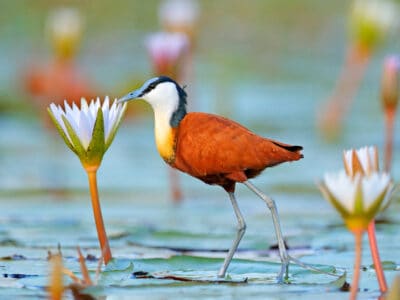
A African Jacana
African Jacana

The males raise the young

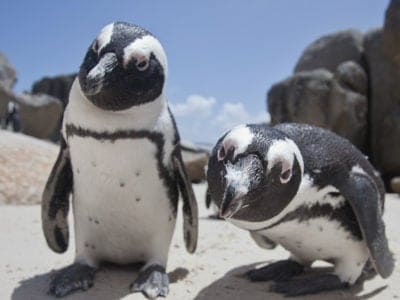
A African Penguin
African Penguin

The only penguin species in Africa!

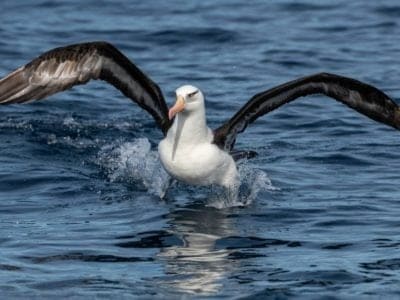
A Albatross
Albatross

The largest wingspan of any bird in the world!

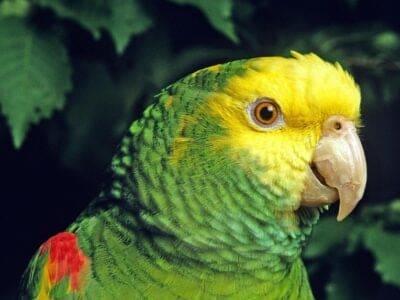
A Amazon Parrot
Amazon Parrot

These parrots can be trained to be "talking birds" that mimic human speech

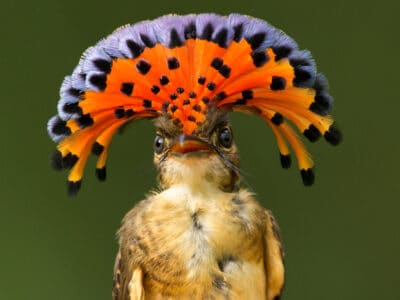
A Amazonian Royal Flycatcher
Amazonian Royal Flycatcher

They use their bright royal-looking crests during mating season

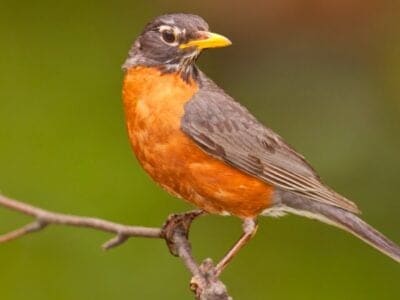
A American Robin
American Robin

The color “Robin egg blue” is named after the hue of their eggs.


Birds: Different Types, Definition, Photos, and More

Updated: April 17, 2022
© Drakuliren/Shutterstock.com
Share on:   

Advertisement

A-Z Animals was founded on three guiding principles: accurate content you can trust, spreading knowledge on the animal kingdom, and giving back. Today, more than 30,000 species are threatened with extinction, and thousands would already be lost without tireless conservation efforts. Knowing that the first step toward conservation is spreading knowledge of the incredible animals species across our planet, A-Z Animals was founded in 2008 to offer an online encyclopedic resource across animals of all kinds.
0 seconds of 1 minute, 10 secondsVolume 0%
 

Birds, members of the class Aves, include more than 10,400 living bird species – more than half being passerine, or “perching” birds. Their feathers distinguish them from all other classes of animal; no other animals on earth have them.

Beautiful to behold and charming to watch, there are many different types of birds that are often kept as pets by humans, and are the subject of many a story or photograph. Birdwatchers number in the millions while bird feeding is a multi-million dollar industry made possible by human beings’ love of our feathered friends.

If you see an animal with feathers, it’s undoubtedly a bird. Like mammals, birds are warm-blooded vertebrates with four-chambered hearts. However, birds are more closely related to reptiles and are believed to have evolved from dinosaurs. Their closest living relatives are the crocodilians.

Their forelimbs have been modified into wings over many millions of years of evolution, they lay hard-shelled eggs and they have exceptional vision – the most acute of their senses. Most types of bird species are diurnal, meaning they sleep at night.

Different types of birds may display different behaviors, though in general, birds are social creatures, communicating with songs, calls, chirps and movements. Some birds participate in cooperative hunting and travel in flocks. Many birds are monogamous – mostly for a breeding season but sometimes for life.

Most birds can fly, but flightless bird species exist.
Five Top Bird Characteristics

Certain identifying characteristics distinguish different types of birds from other classes of animals. Five especially important distinguishing characteristics of birds include:

Feathers

All birds species have feathers, which are actually highly evolved scales. In fact, birds have scales on their feet – the clearest reminder of their close relation to reptiles. As noted above, feathers are not found on any other class of animal. Like nails and hair on humans, feathers are made out of keratin. They serve a number of purposes, from providing warmth to assisting in the ability to fly. Most species of birds shed, or molt, their feathers one or two times per year. Contour feathers help birds to fly effectively and create a streamlined body shape. Soft, fluffy feathers provide warmth. Flight feathers, found on the wings and tail, provide loft. Male birds also often use their feathers to attract mates.

Wings

Wings are a primary characteristic of birds, but they are found on other types of animals too. For example, bats are flying mammals with wings, and many types of insects have wings. Strong muscles in the chest help to propel wings, allowing for flight. Bird bodies are curved specifically to give lift to the wings. Different wing shapes provide different advantages, depending on species. For example, wings that have sharp, narrow tips allow for greater speed. Wings that are longer than they are wide make it easier for birds to soar for extended periods of time. Elliptical, evenly shaped wings, which are most notably found on songbirds, allow for small, quick movement. Different types of birds are capable of swimming, like penguins and puffins, having wings that are shaped like flippers.

Beaks

All bird species have beaks, or bills – bony concentrations that are surrounded by layers of keratin. The shape of a bird’s beak provides strong clues about its dietary habits. Although some species of birds have tumia, sharp ridges along the edges of their beaks, none possess true teeth. Therefore, the beak plays a crucial role in feeding. Birds that primarily subsist off of seeds, for example, tend to have strong, cone-shaped beaks. Ducks, geese and other types of waterfowl have broad, flat beaks that are designed to help them strain food from water. Meat-eating birds like owls and hawks have sharp, hooked beaks that they use to grind, tear and rip their prey to shreds.

Eggs

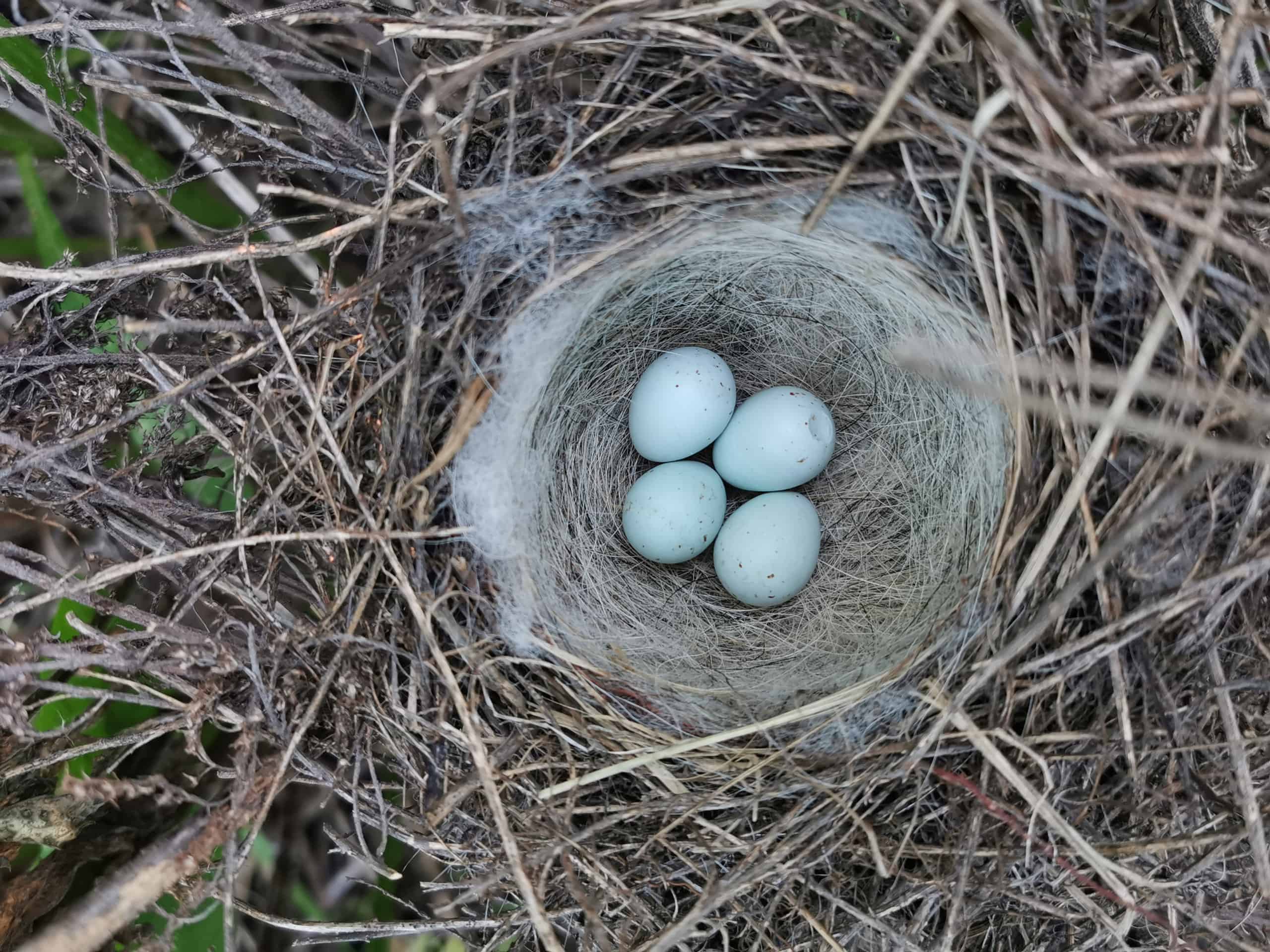
Egg laying is another characteristic that is common to all birds, or members of the Aves class. However, it is not unique to this class of animals, as reptilesfishamphibians and insects also all lay eggs. Birds’ eggs have hard shells that are mostly made out of calcium; a layer of hardened mucus helps to keep them intact. Within an egg, the embryo gets its nutrition from the yolk and the egg white, which is known as albumin. The vast majority of bird species build nests for their eggs and proceed to care for the hatchlings until they are capable of fending for themselves. In most species, both males and females play important roles in caring for the young.

Nearly all species of birds incubate their eggs. Exceptions include megapodes, or mound builders, which rely on external heat sources like decaying vegetation, and brood parasites. The latter, including cuckoos and cowbirds, prefer to lay their eggs in other birds’ nests. Some birds, like murres and certain penguin species, don’t use nests at all, choosing instead to rest eggs on the tops of their feet during incubation. Incubation periods range from 11 to 80 days depending on species.

A set of eggs that is laid at one time is called a clutch. Anywhere from one to 20 eggs or so may be found in a single clutch. Some birds engage in determinate laying, meaning that they lay the same number of eggs per clutch every time. Most birds engage in indeterminate laying, meaning that the number per clutch varies.
Skeleton

Flightless species of birds have heavy bones that are filled with marrow. Birds that are capable of flight – in other words, most birds – have lightweight skeletons made up of hollow bones. Their skeletons have many fused bones, including collarbones, which help them to brace their wings effectively during flight. Birds have large breastbones, or sternums, that provide sturdy points of attachment for muscles of the wings.

Notable Types of Birds

Today, there are more than 10,400 extant different types of bird species in the world. Across North America and South America, there are more than 4,400 species of the Aves class. Approximately 2,700 different species are found in Asia, and another 2,300 or so are found in Africa. More than 500 species are found in Europe west of the Ural Mountains, and more than 700 species are found in Russia. Costa Rica has one of the highest concentrations of bird species – roughly 800.

Some of the most notable types of birds include:

  • Birds of Prey – This group is made up of more than 300 species of birds, including eagles, hawks, ospreys, falcons and vultures.
  • Cranes – This group, which includes coots and rails, boasts more than 200 species.
  • Game Birds – Perhaps the best-known type of bird, game birds include chickens, turkeysquails and megapodes. There are approximately 250 species of game birds in the world.
  • Herons and Storks – More than 100 species are found in this group, which includes egrets, spoonbills and ibises.
  • Hummingbirds and Swifts – The smallest category of birds, this group includes more than 400 different species.
  • Ostriches – The ostrich, the most famous flightless bird, is also the only species in its genus. It also holds the distinction of being among the largest birds.
  • Owls – Another important type of bird is the owl. There are more than 200 species of owls across the world.
  • Parrots and Cockatoos – This colorful group, which includes macaws, cockatiels and budgerigars, consists of more than 350 species. They are popularly kept as pets.
  • Penguins – There are roughly 20 species of this flightless bird in the world.
  • Perching Birds – Also known as passerines, this group includes more than 5,000 species, making it the largest and most diverse. Common types of perching birds include crows, swallows, jays, finches, sparrows, wrens, starlings and larks.
  • Pigeons and Doves – This group includes more than 300 bird species. Pigeons are famous for ferrying messages for humans, and have been used in such a way since Roman times. They were also used during World War I and II and the Korean War.
  • Shorebirds – More than 350 species are found in this group, including sandpipers, terns, oystercatchers and gulls.
  • Waterfowl – Ducks, geese, swans and many other birds belong to this group, which includes more than 150 species.
  • Woodpeckers and Toucans – Known for their distinctive beaks, this group is made up of more than 400 species.
Evolution of Different Types of Birds

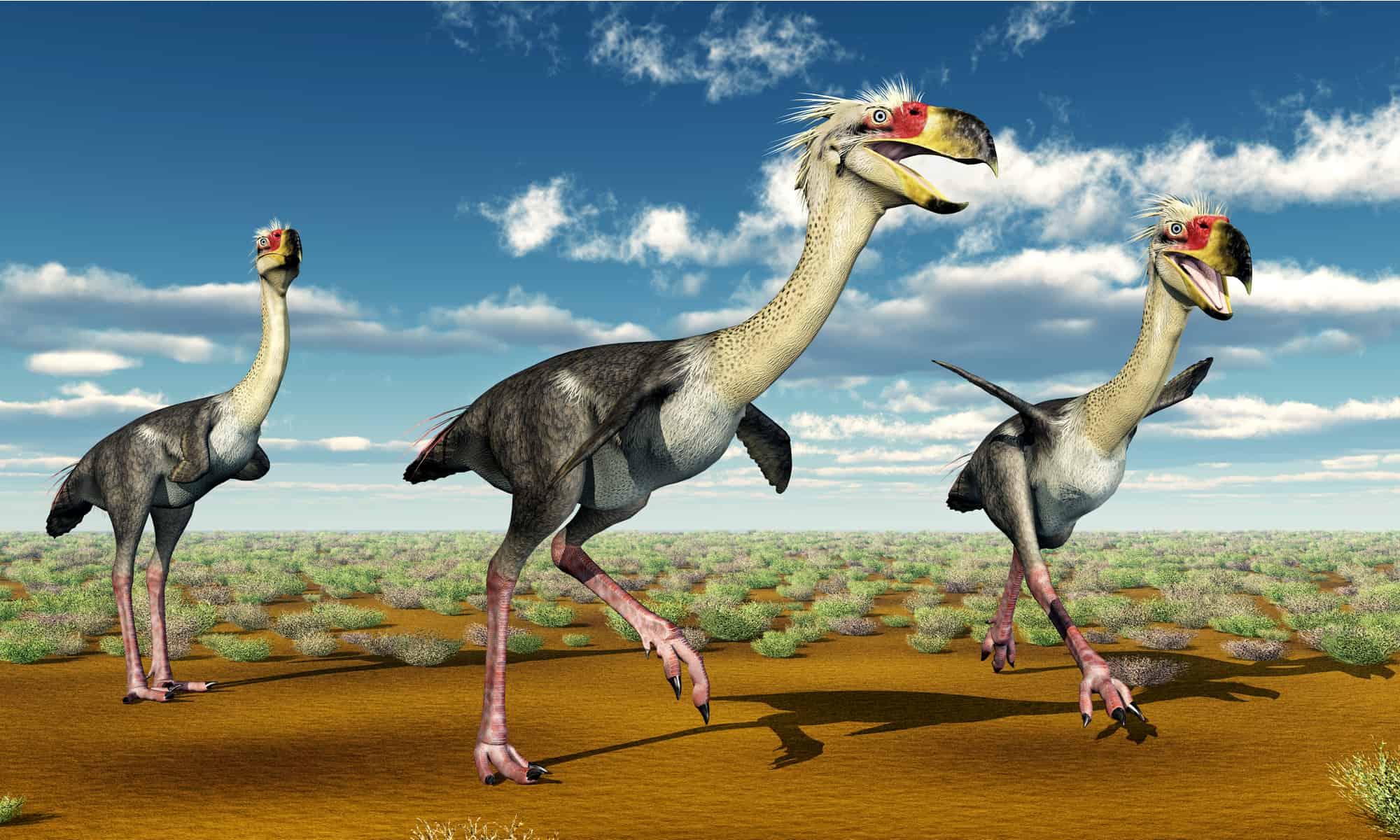
The evolution of birds has been a topic of much debate for many centuries. Today, the most commonly accepted theory, the theropod ancestor hypothesis, posits that birds evolved from theropod dinosaurs during the Jurassic period, which happened between 165 million and 150 million years ago.

Theropod dinosaurs were two-legged dinosaurs, and the T. Rex is included among their ranks.

The earliest known bird on the fossil record, archaeopteryx, was a hybrid between a bird and a dinosaur. It had feathered wings like a bird but also had sharp teeth and a long, bony tail like a dinosaur. This and other types of early birds diversified rapidly throughout the Jurassic and Cretaceous periods. They quickly became capable fliers and exhibited extremely rapid growth rapids.

However, their populations were decimated by the major extinction event that eliminated dinosaurs entirely. After that point, modern birds diversified at an explosive rate, and there are now more than 10,000 different species all across the world.

Types of Birds
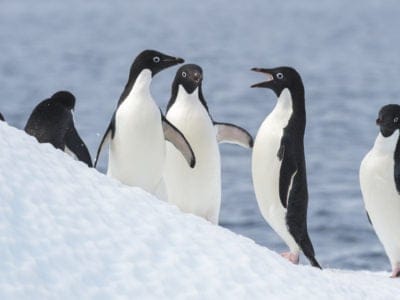
A Adélie Penguin
Adélie Penguin

Eats up to 2kg of food per day!

A African Fish Eagle
African Fish Eagle

African fish eagles belong to the genus of sea eagles

A African Grey Parrot
African Grey Parrot

When a grey parrot named Yosuke got lost, it was reunited with its owner after giving the owner's name and address.

A African Jacana
African Jacana

The males raise the young

A African Penguin
African Penguin

The only penguin species in Africa!

A Albatross
Albatross

The largest wingspan of any bird in the world!

A Amazon Parrot
Amazon Parrot

These parrots can be trained to be "talking birds" that mimic human speech

A Amazonian Royal Flycatcher
Amazonian Royal Flycatcher

They use their bright royal-looking crests during mating season

A American Robin
American Robin

The color “Robin egg blue” is named after the hue of their eggs.


Birds: Different Types, Definition, Photos, and More

Updated: April 17, 2022
© Drakuliren/Shutterstock.com
Share on:   

Advertisement

A-Z Animals was founded on three guiding principles: accurate content you can trust, spreading knowledge on the animal kingdom, and giving back. Today, more than 30,000 species are threatened with extinction, and thousands would already be lost without tireless conservation efforts. Knowing that the first step toward conservation is spreading knowledge of the incredible animals species across our planet, A-Z Animals was founded in 2008 to offer an online encyclopedic resource across animals of all kinds.
0 seconds of 1 minute, 10 secondsVolume 0%
 

Birds, members of the class Aves, include more than 10,400 living bird species – more than half being passerine, or “perching” birds. Their feathers distinguish them from all other classes of animal; no other animals on earth have them.

Beautiful to behold and charming to watch, there are many different types of birds that are often kept as pets by humans, and are the subject of many a story or photograph. Birdwatchers number in the millions while bird feeding is a multi-million dollar industry made possible by human beings’ love of our feathered friends.

If you see an animal with feathers, it’s undoubtedly a bird. Like mammals, birds are warm-blooded vertebrates with four-chambered hearts. However, birds are more closely related to reptiles and are believed to have evolved from dinosaurs. Their closest living relatives are the crocodilians.

Their forelimbs have been modified into wings over many millions of years of evolution, they lay hard-shelled eggs and they have exceptional vision – the most acute of their senses. Most types of bird species are diurnal, meaning they sleep at night.

Different types of birds may display different behaviors, though in general, birds are social creatures, communicating with songs, calls, chirps and movements. Some birds participate in cooperative hunting and travel in flocks. Many birds are monogamous – mostly for a breeding season but sometimes for life.

Most birds can fly, but flightless bird species exist.

Five Top Bird Characteristics

Certain identifying characteristics distinguish different types of birds from other classes of animals. Five especially important distinguishing characteristics of birds include:

Feathers

All birds species have feathers, which are actually highly evolved scales. In fact, birds have scales on their feet – the clearest reminder of their close relation to reptiles. As noted above, feathers are not found on any other class of animal. Like nails and hair on humans, feathers are made out of keratin. They serve a number of purposes, from providing warmth to assisting in the ability to fly. Most species of birds shed, or molt, their feathers one or two times per year. Contour feathers help birds to fly effectively and create a streamlined body shape. Soft, fluffy feathers provide warmth. Flight feathers, found on the wings and tail, provide loft. Male birds also often use their feathers to attract mates.

Wings

Wings are a primary characteristic of birds, but they are found on other types of animals too. For example, bats are flying mammals with wings, and many types of insects have wings. Strong muscles in the chest help to propel wings, allowing for flight. Bird bodies are curved specifically to give lift to the wings. Different wing shapes provide different advantages, depending on species. For example, wings that have sharp, narrow tips allow for greater speed. Wings that are longer than they are wide make it easier for birds to soar for extended periods of time. Elliptical, evenly shaped wings, which are most notably found on songbirds, allow for small, quick movement. Different types of birds are capable of swimming, like penguins and puffins, having wings that are shaped like flippers.

Beaks

All bird species have beaks, or bills – bony concentrations that are surrounded by layers of keratin. The shape of a bird’s beak provides strong clues about its dietary habits. Although some species of birds have tumia, sharp ridges along the edges of their beaks, none possess true teeth. Therefore, the beak plays a crucial role in feeding. Birds that primarily subsist off of seeds, for example, tend to have strong, cone-shaped beaks. Ducks, geese and other types of waterfowl have broad, flat beaks that are designed to help them strain food from water. Meat-eating birds like owls and hawks have sharp, hooked beaks that they use to grind, tear and rip their prey to shreds.

Eggs

Egg laying is another characteristic that is common to all birds, or members of the Aves class. However, it is not unique to this class of animals, as reptilesfishamphibians and insects also all lay eggs. Birds’ eggs have hard shells that are mostly made out of calcium; a layer of hardened mucus helps to keep them intact. Within an egg, the embryo gets its nutrition from the yolk and the egg white, which is known as albumin. The vast majority of bird species build nests for their eggs and proceed to care for the hatchlings until they are capable of fending for themselves. In most species, both males and females play important roles in caring for the young.

Nearly all species of birds incubate their eggs. Exceptions include megapodes, or mound builders, which rely on external heat sources like decaying vegetation, and brood parasites. The latter, including cuckoos and cowbirds, prefer to lay their eggs in other birds’ nests. Some birds, like murres and certain penguin species, don’t use nests at all, choosing instead to rest eggs on the tops of their feet during incubation. Incubation periods range from 11 to 80 days depending on species.

A set of eggs that is laid at one time is called a clutch. Anywhere from one to 20 eggs or so may be found in a single clutch. Some birds engage in determinate laying, meaning that they lay the same number of eggs per clutch every time. Most birds engage in indeterminate laying, meaning that the number per clutch varies.

Skeleton

Flightless species of birds have heavy bones that are filled with marrow. Birds that are capable of flight – in other words, most birds – have lightweight skeletons made up of hollow bones. Their skeletons have many fused bones, including collarbones, which help them to brace their wings effectively during flight. Birds have large breastbones, or sternums, that provide sturdy points of attachment for muscles of the wings.

Notable Types of Birds

Today, there are more than 10,400 extant different types of bird species in the world. Across North America and South America, there are more than 4,400 species of the Aves class. Approximately 2,700 different species are found in Asia, and another 2,300 or so are found in Africa. More than 500 species are found in Europe west of the Ural Mountains, and more than 700 species are found in Russia. Costa Rica has one of the highest concentrations of bird species – roughly 800.

Some of the most notable types of birds include:

  • Birds of Prey – This group is made up of more than 300 species of birds, including eagles, hawks, ospreys, falcons and vultures.
  • Cranes – This group, which includes coots and rails, boasts more than 200 species.
  • Game Birds – Perhaps the best-known type of bird, game birds include chickens, turkeysquails and megapodes. There are approximately 250 species of game birds in the world.
  • Herons and Storks – More than 100 species are found in this group, which includes egrets, spoonbills and ibises.
  • Hummingbirds and Swifts – The smallest category of birds, this group includes more than 400 different species.
  • Ostriches – The ostrich, the most famous flightless bird, is also the only species in its genus. It also holds the distinction of being among the largest birds.
  • Owls – Another important type of bird is the owl. There are more than 200 species of owls across the world.
  • Parrots and Cockatoos – This colorful group, which includes macaws, cockatiels and budgerigars, consists of more than 350 species. They are popularly kept as pets.
  • Penguins – There are roughly 20 species of this flightless bird in the world.
  • Perching Birds – Also known as passerines, this group includes more than 5,000 species, making it the largest and most diverse. Common types of perching birds include crows, swallows, jays, finches, sparrows, wrens, starlings and larks.
  • Pigeons and Doves – This group includes more than 300 bird species. Pigeons are famous for ferrying messages for humans, and have been used in such a way since Roman times. They were also used during World War I and II and the Korean War.
  • Shorebirds – More than 350 species are found in this group, including sandpipers, terns, oystercatchers and gulls.
  • Waterfowl – Ducks, geese, swans and many other birds belong to this group, which includes more than 150 species.
  • Woodpeckers and Toucans – Known for their distinctive beaks, this group is made up of more than 400 species.

Evolution of Different Types of Birds

The evolution of birds has been a topic of much debate for many centuries. Today, the most commonly accepted theory, the theropod ancestor hypothesis, posits that birds evolved from theropod dinosaurs during the Jurassic period, which happened between 165 million and 150 million years ago.

Theropod dinosaurs were two-legged dinosaurs, and the T. Rex is included among their ranks.

The earliest known bird on the fossil record, archaeopteryx, was a hybrid between a bird and a dinosaur. It had feathered wings like a bird but also had sharp teeth and a long, bony tail like a dinosaur. This and other types of early birds diversified rapidly throughout the Jurassic and Cretaceous periods. They quickly became capable fliers and exhibited extremely rapid growth rapids.

However, their populations were decimated by the major extinction event that eliminated dinosaurs entirely. After that point, modern birds diversified at an explosive rate, and there are now more than 10,000 different species all across the world.

Types of Birds
A Adélie Penguin
Adélie Penguin

Eats up to 2kg of food per day!

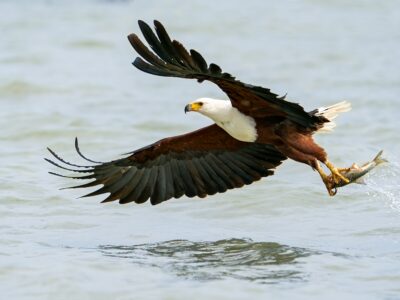
A African Fish Eagle
African Fish Eagle

African fish eagles belong to the genus of sea eagles

A African Grey Parrot
African Grey Parrot

When a grey parrot named Yosuke got lost, it was reunited with its owner after giving the owner's name and address.

A African Jacana
African Jacana

The males raise the young

A African Penguin
African Penguin

The only penguin species in Africa!

A Albatross
Albatross

The largest wingspan of any bird in the world!

A Amazon Parrot
Amazon Parrot

These parrots can be trained to be "talking birds" that mimic human speech

A Amazonian Royal Flycatcher
Amazonian Royal Flycatcher

They use their bright royal-looking crests during mating season

A American Robin
American Robin

The color “Robin egg blue” is named after the hue of their eggs.


Theropod dinosaurs were two-legged dinosaurs, and the T. Rex is included among their ranks.

The earliest known bird on the fossil record, archaeopteryx, was a hybrid between a bird and a dinosaur. It had feathered wings like a bird but also had sharp teeth and a long, bony tail like a dinosaur. This and other types of early birds diversified rapidly throughout the Jurassic and Cretaceous periods. They quickly became capable fliers and exhibited extremely rapid growth rapids.

However, their populations were decimated by the major extinction event that eliminated dinosaurs entirely. After that point, modern birds diversified at an explosive rate, and there are now more than 10,000 different species all across the world.

Types of Birds
A Adélie Penguin
Adélie Penguin

Eats up to 2kg of food per day!

A African Fish Eagle
African Fish Eagle

African fish eagles belong to the genus of sea eagles

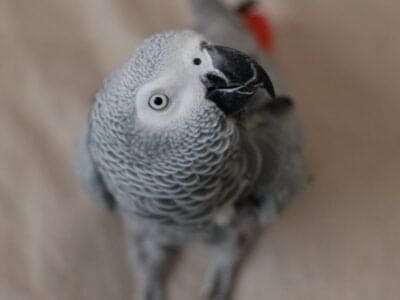
A African Grey Parrot
African Grey Parrot

When a grey parrot named Yosuke got lost, it was reunited with its owner after giving the owner's name and address.

A African Jacana
African Jacana

The males raise the young

A African Penguin
African Penguin

The only penguin species in Africa!

A Albatross
Albatross

The largest wingspan of any bird in the world!

A Amazon Parrot
Amazon Parrot

These parrots can be trained to be "talking birds" that mimic human speech

A Amazonian Royal Flycatcher
Amazonian Royal Flycatcher

They use their bright royal-looking crests during mating season

A American Robin
American Robin

The color “Robin egg blue” is named after the hue of their eggs.


Comments

Popular posts from this blog